All Sites This Site

Find a Program

Find a Lab

MESSAGE FROM THE CHIEF

John P. Roberts, MD


John P. Roberts, M.D.

Professor & Chief,
Division of Transplant Surgery


Read message »

Make a Gift

A gift to the Dept of Surgery
helps us discover new
treatments and cures.


Read more »

 Celebrating 10,000 patients & years of sharing
Transplant Surgery »  News & Events

Select by Date:

International Stem Cell Corporation’s Human Parthenogenetic Stem Cells to be used in the Development of Treatments for Liver Disease

Business Wire - San Francisco,CA,USA - May 14, 2008

"International Stem Cell Corporation  announced today that its human parthenogenetic stem cell lines will be used in studies aimed at creating liver cells to treat human liver disease. ......Holger Willenbring, MD, UCSF assistant professor of surgery, will direct the research. The fact that Dr. Willenbring and the University of California at San Francisco are testing the ability of ISCOs human parthenogenetic stem cells to form liver cells is a strong validation of their potential value in creating therapeutic cells that have significant immune rejection advantages and significant ethical advantages, said Jeffrey Janus, ISCOs President."

Survival rates exceed national averages for UCSF heart, liver and lung transplant programs

UCSF News - Feb 29, 2008

"One-year survival rates for patients receiving heart, liver and lung transplants at UCSF Medical Center exceed national averages at statistically significant levels, according to new data compiled by the Scientific Registry of Transplant Recipients (SRTR)."

UCSF Surgeons Discuss Embryonic Stem Cells as Treatment of Liver Disease on PBS NewsHour

PBS NewsHour with Jim Lehrer - Oct 08, 2007

Dr. Nancy Ascher and Dr. Holger Willenbring were interviewd by PBS NewsHour correspondent Spencer Michels about the transformation of embryonic stem cells into new liver cells as a treatment for patients.

"The Wait for Life" Highlights Organ Sharing Debate, with UCSF's Liver Transplant Service at the Center

UCSF Today, CA - Sep 19, 2006

"A difficult conundrum for the nation's transplant patients was aired September 22 when the news program California Connected featured UCSF's Liver Transplant Program. The story, produced by Jon Dann for public television stations KQED and KCET, highlights the difficult choices that patients, families and doctors face because of the shortage of donated organs for transplantation."

A day in the life of a husband and wife liver transplant team at UCSF Transplant Service

San Francisco Chronicle, CA - Dec 18, 2005

"Of all the things for a married couple to bicker about, Nancy Ascher and John Roberts have hit on a first -- a pulsing human liver. To be precise, they are standing forehead to forehead with a man splayed out between them. Roberts wants more of his liver to take next door to a waiting recipient. Ascher wants more of it left behind for the donor's recovery."

Improving the outlook for simultaneous pancreas-kidney transplants

UCSF Diabetes Center - San Francisco, CA - Feb 01, 2005
"The body's rejection of transplanted organs and tissues is an unfortunate risk of transplant surgery. Historically, rejection rates in a simultaneous pancreas-kidney (SPK) transplant have been as high as 80% and, in 2001, averaged nearly 20%. ........Diabetes Center surgeons Peter Stock, (left) and Chris Freise (right) have been pioneering new methods of immunosuppression for SPK transplants that do not rely upon steroids, with great success...... "
Chris E. Freise, M.D.

Read Full Diabetes Center Article

Read Jourunal Article in American Journal of Transplantation

The Domino Effect - Woman gets new liver, gives her old one to save another life

San Francisco Chronicle, CA - Aug 22, 2000

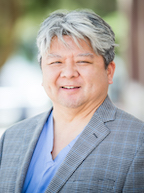
"The next day, surgeons at the University of California at San Francisco performed a rare liver transplant called a ``domino transplant,'' the first in the Bay Area and one of just a handful done in the United States. ........................Her choice was to have a liver that will give her a disease in 30 years, or die of cancer in the next year,'' said Dr. Ryutaro Hirose (pictured left), the surgeon for both transplants. ``She jumped at the chance, and most people would.''